Age of Shared Parenting


This parent shares the objective of shared parenting!  And, the reality of shared parenting!  The saddest part of parents NOT working together is the impact on the child!  A child is ‘forced’ to live their life without one parent.  Just because the parents cannot work together.  Shameful!!!!

Again:  Two parents are in the best interest of the child!  Divorce is between the parents-ABOUT THE CHILD!!!!!   LOVE WINS!!!

.

We live in a time of a shared parenting world.  Yet, for many children, shared parenting is denied.  I know.  I am divorced.  My kids are divorced from me.

Children of divorce are separated from their parents because the parents are in dispute over living arrangements.  Laws and social policy guidelines are outdated.  The ‘system’ put in place to act in the best interest of the child  damages the parent child relationship.  The ‘system’ destroys the child’s choice to communicate with both parents.   When a parent is removed from the child’s life on a daily basis the child becomes the victim.  We need to do something.  The relationship with my 2 children is destroyed. Knowing that my kids will learn the truth in 10 years offers little comfort.  For now, I am missing out on the moments of their lives.  School days, sport practices, and friends after school.  Breakfast and dinner together are ….gone.  Going to church as a family……gone.  Living my life with joy……..gone.  The unfair courts have ruined my life.  If you are thinking about divorce-don’t do it.  Do what you can to stay together.  Staying in a bad marriage is better than  a divorce.

.

#272, Age of Shared Parenting

Revelations of Divorce


This adult child of divorce shares their story on PAS.  Learning the truth about a parents’ tactics to deter the relationship from one parent will not last forever.  The truth will come to light.  Not working together as parents is not in the best interest of the child.  

.

For several years, Mel persisted in trying to make contact with Ned. He wrote letters, sent gifts, tried to phone, but Marla foiled every one of his efforts. During this time, Ned struggled through high school and took a job as a delivery boy on the streets of Manchester.

Ned’s visit to his father

Shortly after Ned’s eighteenth birthday, the boy phoned Mel and asked if he could visit him in Arizona. He wanted to check out the monster his mother had described to him. Mel was elated at the prospect of seeing his son and not surprised at the negative image Marla had painted. Perhaps the visit would dispel some of Ned’s suspicions. But to Mel’s great disappointment, their time together was a disaster. They “just didn’t click.” Ned was wary and reticent. Father and son could not seem to find any common ground. There was only one topic that interested Ned: the divorce and its aftermath. He asked countless questions about why, when, and how his parents had quarreled, and why Mel had never tried to contact him during all those years. Mel explained that he had written, he had sent gifts, and most important, he had contributed to Ned’s support. These revelations baffled Ned, since they contradicted everything his mother had told him. Put off balance, he became more morose and confused. Now he felt compelled to “choose” between one parent and the other, unsure of whom to believe or trust. It became clear to Mel that a true reconciliation could not occur at this time. After waiting so many years, it seemed that he would never have a genuine role in his son’s life.

Comments:

The impact of a contentious divorce often ignites many “brushfires” in the extended family. It creates hostilities that spread to other relationships and spawn additional cutoffs. In Mel’s family, the divorce resulted in estrangement, not only from his son, but between Ned and the older generation, depriving Mel’s parents of the role of grandparent. Because of the bitter antagonism between Mel and Marla, Ned grew up without a father. They connected only after he reached adulthood. In many divorced families, there are complex patterns of separation and re-alignment, interspersed with repeated accusations and retaliations. Mel’s story was played out over a period of more than thirty years. It took a long time for the bonding between father and son to develop. We cannot know if Marla has resolved her anger and moved on to build a new life. We do know that in many families in which a divorce has occurred, no complete healing or repair is possible. For Mel and Ned, there is the gratification of knowing that a prolonged separation has been transformed into a meaningful, harmonious relationship.

.

Read full story of Divorce and the ripple effect: http://fragmentedfamilies.com/stories.html

#271, Revelations of Divorce

A Plea for Help


An 11-year-old is able to summarize what many courts have not. Thankfully, this judge was astute enough to see this child’s plea for help! Truly, a case of the parents putting their anger and hatred before the needs of the child.  


She has witnessed countless bitter rows between her warring parents, including an incident at her primary school assembly that led to police being called. Her mother, a health worker, admits she has an alcohol abuse problem and her behaviour towards her former husband and his new wife has been ”appalling”.

Her parents can barely speak to each other. Tempers flared when her father took her on an overseas trip without telling her mother.

But when she wrote a school project about a child trapped in a vicious custody battle, a Family Court judge heard a cry for help.

”This has got to stop,” the 11-year-old known as ”T” wrote in a childish cursive script. ”Not in a few years. Not when people can finally be [bothered] to do it. It needs to be done NOW!”

In four sentences, the student traced the despair of thousands of children dragged into messy familial dramas in the courts – and their struggle to be heard above the fray.

”The heading of the writing … said that in the Family Court, children should have a say,” Justice Paul Cronin said in a judgment published last week.

”She said the court got to choose the residence of a child or what the child did, and she rhetorically asked whether that was fair. She said that children should have a day to go into the court and speak up.

”In a pointed remark, the child wrote that adults buy and build houses and children should at least get an opportunity to decide where they lived and with whom they wanted to live.”

Since 2006, the Family Court has been required to take into account any views expressed by the child when making parenting orders. In the vast majority of cases, their views are filtered through a lawyer, psychologist or a family consultant, who is an officer of the court.

T’s writing project, in a school exercise book, was brought to the court’s attention by one of the psychologists who gave evidence. The child, he said, had been living in a ”tragic split world” since her parents separated when she was five. She was ”the linchpin through which parental conflict was channelled”. The law says the Family Court’s ”paramount consideration” when making parenting orders is the interests of the child.

But for children such as T, who was assigned an independent lawyer by Legal Aid, court disputes over where they will live, and how, seem focused squarely on the parents.

Justice Cronin noted that much of the evidence in this case was about her mother and father, ”even though they may not have seen it that way”.

He said T’s mother was ”disarmingly candid” about her drinking problem but had produced records that it was under control. If she was unable to curb the problem, he said, ”the Sword of Damocles may now be sitting there” and T’s father would be ”well within his rights” to argue he could not have a relationship with his daughter while she was part of her mother’s world.

In a second piece of writing, T wrote about a family ”falling apart” and a father who was ”mean to her mother”.

”It has all of the remarkable hallmarks of the child referring to her own family situation,” Justice Cronin said.

”It oozes with particularity in her stream of consciousness. In a bizarre ending, the mother is stabbed. The child returns home to find her mother covered in ‘bright red blood’. It is a cry for help.”

The judge made parenting orders running to 27 paragraphs, including that neither parent should contact the other, outside of emergencies, until they had agreed in writing that they could be civil about their daughter. ”Unfortunately their focus has been on each other rather than on the child,” he wrote. ”It is time to stop for the child’s sake.”

.

Sydney Morning Herald.  Childs school project becomes a plea to the family court.

#270, A Plea for Help


Scars of Divorce


A child of divorce shares the emotional turmoil experienced during her parents divorce.  One paragraph is especially revealing and is in bold type.  This is an excellent expose on the impact that divorce has on a child.  Not only during childhood but throughout their entire lives!

.

Growing up in suburban Philadelphia, the daughter of two yuppies, it seemed like I had everything. I was pretty sheltered, a shy child by nature and nurture. The later cause of my introverted nature was the fact that my parents avoided verbal communication with each other. The only time I remember them directly talking to each other was a rather loud fight.

Instead of providing a good relationship model and any hint of social skills for me, my parents’ example made me evade meaningful social interactions with my peers. I found refuge in school, dance, and music. Unfortunately, my older sister discovered escape through drinking, drugs, and sex.

Fast-forward to late 2003. I was in 8th grade, in the middle of the terrible, horrible, no-good, very bad stage of puberty. My parents announce that they are getting a divorce. Although they had been practically divorced during my entire life, this announcement turned my world upside down. My life-long depression spun out of control. I started experiencing suicidal thoughts. The climax of my depression was when I held a knife to my wrist. I wanted to kill myself, but I was afraid of the physical pain I would feel. I ended up putting the knife down. The next day, I went to see my guidance counselor at school. I told her what happened, and long story short, I was sent to the mental hospital. After my hospital visit, I continued therapy and medication.

While I no longer experienced suicidal thoughts, I still had much healing to accomplish. I learned that both my mother and my father had been in long-term relationships with other people (their current spouses). I also learned that my mother had been married before she met my dad. I was disgusted with the deceit and lies my parents had been feeding me. I was stronger than they thought, so why didn’t they tell me the truth? I was so irate that they would blatantly lie to me!

In high school, I was still very shy and hesitant to develop real relationships. Subconsciously, I think that I was afraid of being hurt by others. My parents “relationship” consisted of mostly silent treatment, with occasional incidents of passive-aggressive behavior. In my mind, that was the pattern that all relationships followed. Throughout high school and the first year or two of college, I thought that in the rare chance that I became married, I would eventually get divorced.

Both my mother and father remarried, the former in January 2009 and the later in December 2011. My sister was in a serious relationship with a great guy. In my own family, I constantly felt like a third wheel in my family. I only started dating in college, but was consistently disappointed by the lack of authentic men on campus. Fortunately, I became more involved in my church community and learned about self-less, sacrificing, true relationships through academic study and personal witness of couples committed to each other, through good and bad times.

I will always carry some scars from my parents’ divorce. I share my story with you to show you that divorce is a horrible experience for children. If you come from a faith background, the following quote best sums up divorce:

“Divorce is when parents cast of their cross and give it to their children.”

My story is just a small example of how deeply wounded our culture is by our destruction of marriage. We must work diligently to restore the true meaning of marriage as a sacrificial, life and love-giving union that produces children and furthers the good of all society. Marriage is a beautiful, life-long commitment and must be carefully entered into and protected and nourished by every one of us.

.

Marriage-Ecosystem.  

Link to site: http://www.marriage-ecosystem.org/their-divorce-nearly-killed-me.html

#269, Scars of Divorce

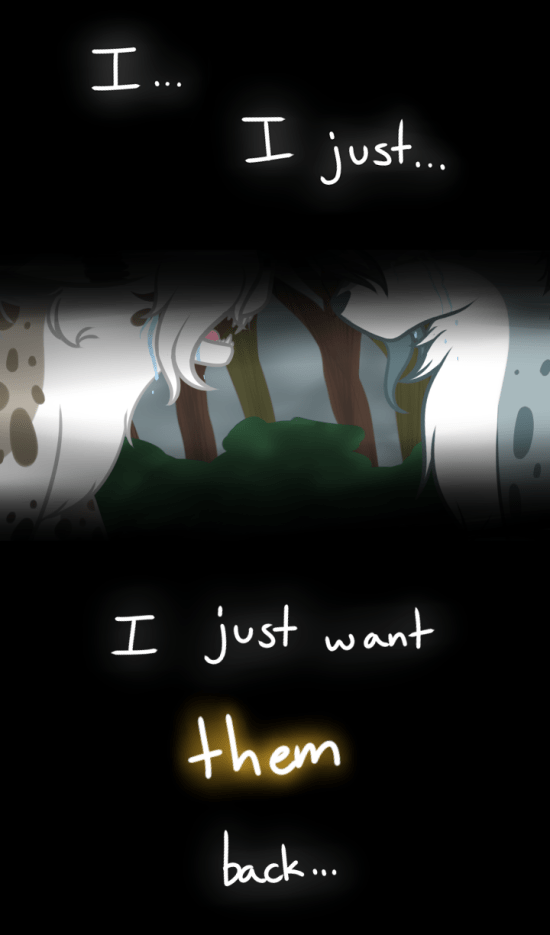
I Just…


An emotional plea for her parents to be together.  A common theme with children of divorce.  The artist comments: “My parents divorced when i was kinda young (i think i was going into my last years of elementary school) and at the time i was crushed bc i really looked up to my dad and he was the one that moved out.”

I just want them back dl __tsc____how_could_you__by_fimbulvetrstar-d93qv2i

.

Deviant Art, How Could You by Fimbulvetrstar

Link to artwork: http://www.deviantart.com/art/TSC-how-could-you-550487754

# 268, I Just …

When Parents Don’t Love Each Other


One adult child of divorce shares the reality and heartbreak of divorce and remarriage.  How true!  A child has DNA from both parents.  When one parent criticizes the other parent they are also criticizing the child.   The same is true for family relationships.  

Interesting take on what parents should do when they decide to divorce.

.

When parents don’t love each other, they don’t love each others family. When they don’t love each other’s family, they don’t love the family of their child. The child feels alone and can’t show too much love or devotion to either side.

When the parents remarry and have children, they love that new spouse, and that new spouses family. The first child has to watch while the parent loves and gives preference to that new child’s whole family.

This state can continue for the first child’s entire life. watching the parents ignore 1/2 of the first child’s family, and giving preference and love to the latter child’s entire family.

I have lived this as the first child. the anger at the callousness and unfairness never really subsides. And then they wonder why you’re angry and why you never really seem to “get over it.”

When the parents don’t love each other, they should just give the child up for adoption rather than making the child live like that.

.

Shared on Marriage-ecosystem.org

Link to site: 

http://www.marriage-ecosystem.org/when-parents-dont-love-each-other.html

#267, When Parents Don’t Love Each Other

Heartbreaking Questions Kids Ask About Divorce


“There are few parenting moments more difficult than having to answer your kids’ questions about the divorce.

No matter how much you prepared yourself for their inevitable confusion, those moments still manage to catch you off guard. How are you supposed to help them wrap their heads around life after divorce when you’re still struggling to get a handle on it yourself?”

Here are the questions kids asked:

.

1. “I just want you and daddy to be in the same house. Can’t you just be roommates? For me?”

2. “When I told my 6-year-old son about the split, he said, ‘Does this mean we’ll be daddy-less kids?’ Now that hurt.”

3. “My 10-year-old son Michael asked, ‘Will this home always be here for us?'”

4. “Will your new wife be our aunt, or what? ‘Cause we already have a mom.”

5. “At age five, my child asked, ‘When does your heart tell your brain — or your brain tell your heart — you’re not in love anymore?'”

6. “‘Why did daddy break his promise to us?‘ He had promised to find a place to live close to us… then he moved to another city.”

7. “What will happen when I get married and you two can’t even be in the same room together at my wedding?”

8. “Why can’t daddy’s girlfriend just live here, too?”

9. “‘How come you don’t spend the night anymore?’ and later, ‘How come you and mommy didn’t get along?'”

10. “Why didn’t you leave dad a long time ago?”

11. “‘Why doesn’t daddy love us anymore?’ They haven’t seen him in one and a half years.”

12. “Why don’t you and daddy just stay together and work it out? You are supposed to be a team and a team works together, right?”

13. “Is it my fault?


Huffington Post Article.  13 Utterly Heartbreaking Questions Kids Ask About Divorce

Link to article: http://www.huffingtonpost.com/2014/06/17/kids-and-divorce_n_5503935.html?utm_hp_ref=children-of-divorce

#265, Heartbreaking Questions Kids Ask About Divorce

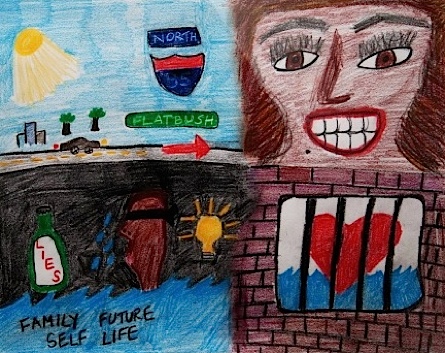
Family and Future


A descriptive piece of art sharing the key emotional issues of divorce; Family, Future, Self and Life .  Seeing the heart behind bars is quite revealing. The lower left quadrant seems representative of the overall theme.  The dark background, LIES, a bottle (alcoholism perhaps?), the appearance of facial structures out of sun rays.  The ‘smile’ on the face appears forced-for obvious reasons when looking at the full pic.   

Art Family future life m

.

Artwork by Jennifer Michelle.

#264, Family and Future

How Divorce Works


One father shares the joy and heartache of spending time with his son.  Sadly, he has limited custody.   He cherishes each moment he can parent his child!   Family time is overshadowed by the limited hours he is allotted each month.  This speaks to the importance of Shared Custody.  How can a parent establish an emotional bond, teach what a child needs to learn, and instill a sense of  responsibility in their child and LOVE their child in a few hours each month.   The presumption of 50/50 custody is in the best interest of the child!

.

This is how it works.

When you finally do the get chance to spend time with your child, you are so worked up and well-rested from the sometimes two weeks without contact (I’m lucky I only have to go 8 days), that you cannot sleep when they are with you.

You feel ready to go to sleep, you feel tired, but when you actually lie down to go to bed you can’t help but get up and walk by their room, or perhaps, even go in and sit with them while they sleep. You don’t want to miss a moment of time because it is so precious.

.

#262, How Divorce Works